Introduction
As an international student or a parent supporting one, when you finally overcome the language barrier and academic challenges and are about to graduate from a Canadian university, that diploma and transcript represent far more than credits earned. They are your first keys to a post-graduation work permit, further studies, or returning home to begin your career.
Yet many people only realize they have a problem at the moment they need these documents the most. What if the diploma gets lost in the mail? How do you request an official transcript? Which documents are required for degree authentication back home? These questions may seem minor, but they can completely derail your plans. I have seen too many students miss crucial deadlines because of a small oversight. This article is designed to help you master the correct way to handle your Canadian university diploma and transcript, so you can avoid unnecessary mistakes and delays.
What Are a Canadian University Diploma and Transcript? How Do They Differ?
Before we dive into the processes, we must clarify a fundamental concept. In Canadian higher education, the diploma (or degree certificate) and the transcript are two completely separate documents, each serving a different function.
-
The diploma is the certificate issued by the university, confirming that you have met all graduation requirements. It usually comes as a single original copy, formal in appearance, and bears the university seal, signatures, and often a watermark.
-
The transcript is a detailed record of all the courses you took and the grades you earned throughout your studies. It reflects your academic journey, grade point average, credit transfers, and more.
A common misconception is that having the diploma means you don’t need the transcript. In reality, whether you are applying for a master’s program or completing a credential evaluation back home, the official transcript is often the mandatory core document. Practical experience has repeatedly proven that treating both documents with equal care is the only way to ensure smooth subsequent procedures.
How to Request Your Canadian University Diploma and Transcript: 5 Key Steps
Whether you are a fresh graduate or an alumnus who returned home years ago, the basic logic for requesting official documents remains consistent. Refer to these tried-and-tested steps:
-
Confirm your eligibility
Make sure you have no outstanding financial holds, library fines, or unreturned equipment. Approximately 90% of Canadian universities block access to official transcripts or diplomas if there is any hold on your account. -
Log into your student portal
Most universities offer online request services through student portals like ACORN, MyService, or goSFU. Look for the category labeled “Transcript & Degree Certificate Request” and initiate your order there. -
Select the correct document type
Transcripts are generally divided into Official (sealed) and Unofficial versions. For immigration, graduate school applications, or credential evaluation, you must choose the Official Transcript and request that it be sent directly to the recipient institution or provided to you in a sealed envelope. If you need an additional copy of your diploma, you will need to select “Replacement Diploma.” -
Double-check the recipient address and delivery method
For international delivery, it is advisable to select a courier service with tracking, such as FedEx or DHL. Verify the exact mailing address required by the recipient, whether it is WES, the Chinese Service Center for Scholarly Exchange, or another organization. -
Pay the fee and keep your receipt
Fees usually range from 10 to 50 CAD, with courier charges calculated separately. Save the order confirmation email – it is your only proof for tracking your order status and package later on.
What to Do If Your Diploma Is Lost or Damaged: The Replacement Process
If the original diploma is lost, you cannot obtain an identical duplicate, but you can apply for a Replacement Diploma that carries the same legal validity. This is a uniform policy at nearly all Canadian universities.
When requesting a replacement, please note the following points:
-
Prepare notarized identification: If you have changed your name, you must simultaneously submit legal documentation proving the name change.
-
Sign a declaration form: The university will typically require you to complete a form stating that the original certificate has been lost or destroyed and that you accept legal responsibility for the declaration.
-
Processing time and cost: Replacing a diploma is much slower than requesting a transcript, usually taking 4 to 8 weeks, with fees ranging from 50 to 150 CAD. Plan well in advance and do not wait until just before a deadline to act.
Returning Home: The Relationship Between Degree Authentication and Transcripts
A question that concerns many students and parents is whether a Canadian degree will be recognized back in their home country. This involves the international degree authentication process, such as that conducted by the Chinese Service Center for Scholarly Exchange (CSCSE).
This authentication process heavily depends on your official final transcript. Based on current policies, the evaluating agency typically requires you to upload:
-
A color scan of your degree certificate (diploma)
-
A complete scan of your official final transcript
-
Scans of your passport and all relevant visas or study permits
A critical reminder: your transcript must clearly indicate that your degree has been conferred, otherwise the submission will be returned for supplementary materials. If you have already returned home and do not have the original transcript with you, it is recommended that you immediately request an official electronic transcript through your school’s online system, or have the university mail a paper transcript directly to the designated address of the evaluating agency. Please always refer to the latest requirements on the official evaluation agency’s website at the time of your application.
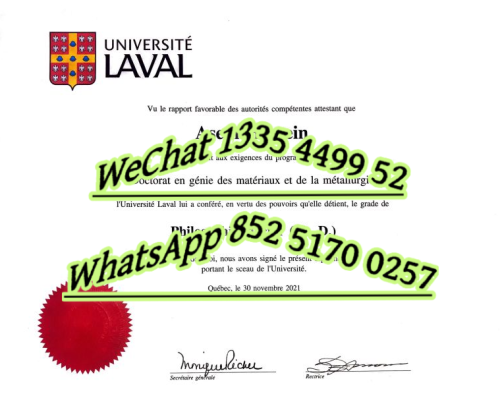
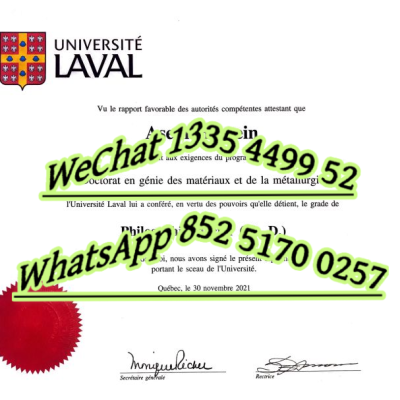
Diploma from Laval University
A Practical Extension: How Changing Majors Affects Your Transcript
There is another often-overlooked issue: what happens if a student changes majors or transfers from another institution? How is this reflected on the final transcript? Canadian universities typically list all courses taken, including transfer credits, and indicate which ones were applied toward final degree requirements. This matters significantly for graduate school applications, as admissions officers look not only at the overall GPA but also at your performance trend in core courses. Therefore, carefully planning your academic path is far more effective than trying to explain a suboptimal transcript after the fact.
Frequently Asked Questions (FAQ)
Q: Are electronic transcripts and paper transcripts from Canadian universities equally valid?
The vast majority of Canadian universities now offer secure official electronic transcripts (eTranscripts) sent through encrypted platforms like MyCreds™ or Parchment. Receiving institutions can verify them directly online, so they carry the same legal weight as paper sealed transcripts and are delivered much faster. However, you should confirm in advance whether the recipient (such as certain government bodies) accepts electronic formats.
Q: If the date on my diploma does not match the actual convocation date, does it matter?
No, it does not. The date printed on the diploma is a fixed degree conferral date, which may differ by a few days to a few weeks from the convocation ceremony date. This date is finalized by the Registrar’s Office and serves as the official date for employment background checks and credential evaluations.
Q: I am in my home country and don’t have a Canadian bank account. How can I pay the university’s application fee?
Most Canadian universities accept online payment using Visa or Mastercard credit cards. If you truly have no such card, you can contact the university’s Registrar’s Office to inquire whether they accept an International Money Order, but this method is slower and generally not the preferred option.
Prepare for Your Next Step
Managing your Canadian university diploma and transcript is not just about completing an administrative procedure; it is about properly archiving an important chapter of your life. If this article has helped clarify the process for you, consider bookmarking it or sharing it with fellow students and parents who might need it.
You are welcome to leave a comment describing any unique situation you are facing, and I will try to provide directional advice. If you would like more personalized document review or application planning services, feel free to book a one-on-one consultation with our education advisor through our online system.