NTNU Degree Authentication: Diploma, Degree & CSCSE Guide for International Students
Graduating from the Norwegian University of Science and Technology (NTNU) is a major achievement. But like many international students, you may now be facing a confusing tangle of questions: Is the document I received a diploma or a degree? Will it be recognised in my home country? How do I even start the overseas degree authentication process? For Chinese students and parents in particular, the requirement to obtain CSCSE certification can feel like a second graduation exam. This guide is designed to clear up every aspect of that confusion. We will walk through the four critical dimensions — diploma, degree, certification/authentication, and university profiles — using NTNU as a detailed real-world example. By the time you finish reading, you will know exactly what your Norwegian qualification represents, how to complete the Chinese Service Center for Scholarly Exchange (CSCSE) authentication, and why NTNU is a rock-solid choice for your degree.
Diploma vs. Degree: What’s the Difference? {#diploma-vs-degree}
For graduates educated in the Norwegian system, one of the most frequent sources of anxiety is the supposed divide between a diploma and a degree. You might hear peers talking about a “graduation certificate” and a “degree certificate” as two separate documents, and then look at the single certificate you received from NTNU and worry that something is missing. Let’s clear this up once and for all.
The Norwegian Reality: One Document, Both Roles
In Norway, and at NTNU in particular, you are not issued a separate graduation certificate and a separate degree certificate. Instead, you receive a single official document — called a vitnemål in Norwegian, which is most often translated into English as Diploma or Degree Certificate. This vitnemål serves as both your proof of programme completion and the formal conferral of your academic title. On the document itself you will find the specific degree awarded, for example:
-
Bachelor of Science (BSc)
-
Master of Science (MSc)
-
Master of Technology (M.Tech / Sivilingeniør)
-
Philosophiae Doctor (PhD)
Because this vitnemål explicitly states your degree and carries the university’s seal and signature, it is treated as your degree certificate in all authentication contexts. There is no second, separate “diploma” that you would need to hunt for.
How This Maps to the Chinese System
The Chinese higher education system typically issues two documents: a 毕业证 (graduation certificate) and a 学位证 (degree certificate). For NTNU graduates, your single vitnemål covers the function of both. When you apply for CSCSE degree authentication, the evaluators will use this vitnemål — supplemented by your Diploma Supplement and transcript — to determine the Chinese equivalent of your qualification. The final electronic credential report you receive from CSCSE will confirm your education level and degree, giving you the same recognition as if you had presented two separate documents.
The Diploma Supplement Adds Clarity
NTNU, following the Bologna Process, also provides a Diploma Supplement in English. While not a diploma or degree itself, this supplementary document describes your qualification in internationally standardised terms, including the level, content, and status of your degree. It is extremely helpful during the authentication process because it bridges any terminology gaps between Norwegian and Chinese academic systems.
In short: your NTNU vitnemål is your degree certificate, and it also functions as your diploma. Grasping this early will prevent unnecessary panic during the overseas degree authentication journey.
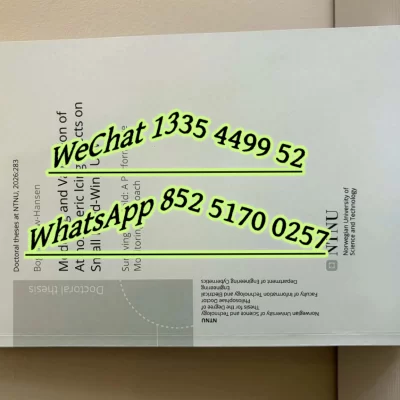
Purchase of Diploma from Norwegian University of Technology
University Profiles: Understanding NTNU and the Norwegian Higher Education System
Choosing a fully accredited and internationally recognised university is the foundation of a smooth certification process. Let’s look at exactly what kind of institution NTNU is, and how Norwegian degrees are structured.
Norwegian University of Science and Technology (NTNU) at a Glance
-
Founded: 1996 (through the merger of several older institutions, with roots dating back to 1910)
-
Status: Public research university, owned by the Norwegian Ministry of Education and Research
-
Campuses: Main campus in Trondheim, with additional campuses in Gjøvik and Ålesund
-
Student population: Over 40,000 students, including a large and active international community
-
Academic profile: Norway’s premier university for engineering, technology, and natural sciences, also strong in architecture, social sciences, medicine, and teacher education
-
Ranking: Consistently placed among the top 400–500 universities worldwide, and within the top 100 for engineering and technology in several subject rankings
-
Language of instruction: Most bachelor’s programmes are taught in Norwegian, while a very wide range of master’s and PhD programmes are conducted entirely in English
-
International partnerships: Extensive exchange agreements and double degree programmes with universities across Europe, Asia, and North America
NTNU is fully accredited by the Norwegian Agency for Quality Assurance in Education (NOKUT) and is listed on the Chinese Ministry of Education’s Education Foreign Supervision Information Network (涉外监管信息网). This means any degree you earn at NTNU is pre-verified as eligible for CSCSE authentication.
The Structure of Norwegian Higher Education
Norway follows the three-cycle Bologna Process, which makes NTNU qualifications directly comparable to those from other European countries and beyond:
-
Bachelor’s degree (Bachelorgrad): 3 years, 180 ECTS credits
-
Master’s degree (Mastergrad): 2 years, 120 ECTS credits (including the five-year integrated Master of Technology, Sivilingeniør)
-
PhD (Ph.d.): 3–4 years of research, often leading to a Philosophiae Doctor degree
All NTNU qualifications are issued with a Diploma Supplement that clearly states the degree level, ECTS credits, and the national qualifications framework alignment. This transparency significantly simplifies the certification process when you return home.
Copy and purchase diplomas from Norwegian University of Technology
CSCSE Credential Authentication: Step-by-Step Process and Document Checklist
Once your NTNU vitnemål is in hand, the next essential task is to secure Chinese degree authentication through the CSCSE. The entire process is now online and typically does not require mailing original documents. Here is the complete procedure for 2026.
Step-by-Step Authentication Process
-
Create an account on the CSCSE portal
Go to zwfw.cscse.edu.cn and register with your Chinese ID number or passport number. Choose the “Overseas Academic Degree Authentication” service. -
Fill in your personal and study information
In the institution search field, enter “Norwegian University of Science and Technology” or “NTNU”. The university will appear in the pre‑verified list — selecting it from the list confirms its official recognition. Enter your degree level, exact programme name as shown on your vitnemål, and the official start and end dates of your studies. -
Prepare and upload digital documents
You will need to provide clear colour scans or high-quality photos of the following:-
Your NTNU vitnemål (degree certificate) — front and back if applicable
-
Complete transcript of records (characterutskrift)
-
Diploma Supplement (highly recommended; usually provided together with the vitnemål)
-
Passport bio-data page
-
All Norwegian residence permit cards or visa stickers covering your full study period
-
A recent passport-style colour photo with a white background
-
An electronic authorisation declaration, signed during the application process
Note: If your vitnemål and transcript are in Norwegian or English, they are generally accepted without translation. However, if any document is in a less common language, a certified Chinese translation may be required. Always check the latest CSCSE guidelines on language policy for Nordic countries.
-
-
Pay the authentication fee
The fee is currently about 360 RMB and is payable directly through the portal. -
Monitor your application and receive the e-report
Processing typically takes 10 to 20 working days. Once approved, you will receive an electronic CSCSE Credential Report (国外学历学位认证书) that includes a QR code. This report permanently verifies that your NTNU degree has been officially authenticated. You can download and print it as needed.
Document Checklist (Unordered List)
-
NTNU vitnemål (degree certificate)
-
Official transcript of records
-
Diploma Supplement
-
Passport and Norwegian residence permits
-
Passport-size photo
-
Signed electronic authorisation
Pro tip: While your application is under review, keep an eye on your registered email and phone number. In the rare event that the CSCSE needs to verify details directly with NTNU, having the contact information of the Examination Office or your faculty’s student services ready can help speed things up.
How to Verify if a University Is Legitimate and Whether Its Degree Can Be Authenticated
Choosing a university is a huge investment, and the fear of ending up at an unrecognised institution is real. Here is how you can independently confirm that NTNU — or any overseas university you consider — will pass the degree authentication test.
1. Consult the Official Chinese Education Ministry List
The most direct verification route is the Education Foreign Supervision Information Network (jsj.moe.gov.cn). Under the “Norway” section, you will find “Norwegian University of Science and Technology” listed. Inclusion on this list is the Chinese government’s endorsement that the institution is a legitimate public university whose qualifications are eligible for CSCSE certification.
2. Use the CSCSE Application System as a Validation Tool
When you start an authentication application, the portal’s institution search field acts as a live database of recognised universities. If you can select NTNU from the dropdown list, it means the university is already in the CSCSE’s verified system. No separate pre-approval is needed.
3. Verify National Accreditation in Norway
NTNU is accredited by NOKUT, the official quality assurance agency for Norwegian higher education. You can confirm the university’s status through the Norwegian Ministry of Education and Research’s public registers. As a state-owned university, NTNU operates under the Norwegian Act relating to universities and university colleges, which guarantees its degree-granting authority.
4. Look for Bologna Process and Global Database Alignment
Norway has been a Bologna Process signatory since the beginning, so NTNU’s degree structure complies with the European Higher Education Area standards. NTNU is also listed in the UNESCO World Higher Education Database and the International Association of Universities. These references add a layer of confidence for credential evaluators worldwide.
5. Avoid These Red Flags
-
Agents guaranteeing a degree with minimal on-campus attendance
-
Offers of a “fast-track” NTNU qualification without a formal admission letter and study visa
-
The university name cannot be found on the official Chinese Education Ministry list or the CSCSE selection menu
-
You receive a document that looks significantly different from the standard Norwegian vitnemål format
A legitimate NTNU degree requires you to apply through the official admission process, attend classes in person, complete examinations, and physically reside in Norway for the majority of your programme. There are no shortcuts that lead to an authenticatable degree certificate.
Frequently Asked Questions
1. I graduated from NTNU with a Master of Science. Is my degree automatically recognised in China?
No recognition is automatic. You must complete the CSCSE authentication process and obtain the electronic overseas degree authentication report before your qualification is formally recognised for employment, further study, or household registration purposes in China.
2. My NTNU vitnemål says “Diploma” in English. Is this my degree certificate?
Yes. In the Norwegian-English context, the word “Diploma” on your vitnemål means exactly that — your degree certificate. When uploading to the CSCSE system, treat this document as your degree certificate. The Diploma Supplement and transcript will provide additional details.
3. Do I need to translate my Norwegian vitnemål into Chinese for CSCSE?
As of the latest guidelines, documents in Norwegian or English are generally accepted without Chinese translation for Norwegian qualifications. However, policies can change, so always verify the current language requirements on the CSCSE website before submitting. If a translation is requested, it must be done by a certified professional.
4. What if my programme was partly taught online due to exceptional circumstances?
The CSCSE evaluates online study on a case-by-case basis. If your programme was designed as an on-campus degree and shifted temporarily online due to force majeure, authentication is often still possible provided NTNU can issue an official confirmation letter. Fully distance-learning degrees that were not originally offered as on-campus programmes carry a high risk of authentication failure.
5. How long does the CSCSE authentication report remain valid?
Once issued, the electronic CSCSE credential report does not expire. The QR code on it can be scanned at any time to verify its authenticity, making it a permanent record of your degree certification.
6. Does NTNU provide support if the CSCSE needs to verify my degree?
Yes. NTNU’s central administration and faculty-level examination offices are accustomed to responding to verification requests from international credential evaluation bodies. Keep your student number and a copy of your vitnemål handy, and contact the relevant office if you receive any communication from the CSCSE requesting direct university confirmation.
Securing your NTNU degree authentication is the final, vital step in making your international education count back home. Now that you understand the true nature of the Norwegian vitnemål, the strong university profile of NTNU, and each stage of the CSCSE certification process, you are fully equipped to handle this with confidence. Bookmark this guide and share it with fellow NTNU graduates who might be wrestling with the same questions — because a smooth overseas degree authentication begins with being informed, prepared, and proactive. Good luck, and congratulations on your achievement from one of Europe’s finest universities.