University of Graz Degrees, Diplomas and Credential Authentication: Everything International Students Must Know
If you are planning to study at the University of Graz or have just graduated, you have probably already asked yourself: What exactly is the difference between a diploma and a degree? Will my qualification be recognised in my home country? How do I get my certificate authenticated? These questions are especially pressing for Chinese students and their parents, who need to navigate the detailed requirements of the Chinese Service Center for Scholarly Exchange (CSCSE). In this guide, we will walk you through all four dimensions that matter — diploma, degree, certification/authentication, and university profiles — using the University of Graz as our case study. By the end, you will understand what documents you receive upon graduation, how to authenticate them for use in China, and why the University of Graz is a safe and respected choice for your international education.
Diploma vs. Degree: What’s the Difference?
One of the most common sources of confusion for international students is the distinction between a diploma and a degree. In everyday English, the two words are often used interchangeably, but in higher education — and especially when preparing documents for credential evaluation — they carry distinct meanings.
Degree (学位证)
A degree is the academic title or rank you earn after completing a programme of study. Examples include Bachelor of Arts (BA), Master of Science (MSc), and Doctor of Philosophy (PhD). The degree certificate (often called the degree certificate or diploma in British English) is the formal document that confirms this title. In the context of Chinese authentication, what the CSCSE needs to see is primarily the degree certificate, because the degree represents your academic achievement level.
Diploma (毕业证 / 文凭)
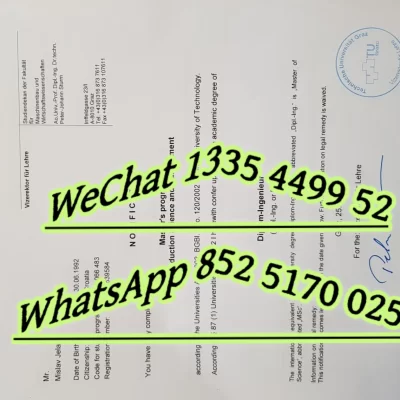
In many education systems, especially those following the Bologna Process like Austria, the term “diploma” can refer to the same physical certificate that states your degree. However, in countries like the UK or Australia, a diploma is sometimes a lower-level qualification (below a bachelor’s degree). At the University of Graz, when you complete a bachelor’s or master’s programme, you typically receive a single graduation document — often called Diplom in German or “diploma” in English — that functions as both proof of completion and the degree certificate. The critical point is that this document serves as your degree certificate for international authentication. To avoid confusion, always refer to the final certificate you receive as your “degree certificate” when dealing with the CSCSE, and check the specific terminology used on your transcript and diploma supplement.
Key takeaway for University of Graz graduates
-
You will receive a degree certificate (sometimes labelled “Diploma” or “Master’s Degree Certificate”).
-
You will also receive a Diploma Supplement, a standardised document describing your qualification in detail.
-
For Chinese degree authentication purposes, the degree certificate and the Diploma Supplement together provide the full picture required by the CSCSE.
Quick application for Graz University diploma
University Profiles: Understanding the University of Graz and the Austrian Education System {#university-intro}
Before we dive into authentication, it is worth knowing exactly what kind of institution the University of Graz is and how Austrian higher education qualifications are structured. This knowledge will help you when you explain your study background to employers or credential evaluators.
The University of Graz at a Glance
The University of Graz (Karl-Franzens-Universität Graz) is one of Europe’s oldest and most prestigious universities, founded in 1585. Located in Graz, Austria’s second-largest city, it is a comprehensive public research university with over 30,000 students and a strong international outlook. It is fully recognised by the Austrian Federal Ministry of Education, Science and Research, which means it is automatically listed in the relevant international databases for higher education institutions.
-
Status: Public university
-
Accreditation: Austrian state accreditation, recognised under the Bologna Process
-
Programmes: Over 120 degree programmes, including bachelor’s, master’s, and doctoral degrees in humanities, natural sciences, social sciences, law, business, and environmental studies
-
Language of instruction: Many master’s programmes and some bachelor’s courses are taught entirely in English
-
Global ranking: Consistently ranked among the top 500–600 universities worldwide, with particular strength in climate research, physics, and life sciences
How Austrian Degrees Fit into the Bologna System
Austria follows the three-cycle Bologna structure, exactly like most other European countries:
-
Bachelor’s (BA/BSc) – typically 6 semesters (3 years), 180 ECTS
-
Master’s (MA/MSc) – 4 semesters (2 years), 120 ECTS
-
Doctorate (PhD/Dr.) – usually 3–4 years of independent research
This structure makes University of Graz degrees directly comparable to degrees from universities in Germany, France, Italy, the Netherlands, and beyond. The Diploma Supplement you receive at graduation explains the level, content, and status of your qualification in an internationally standardised format, which is invaluable for credential authentication.
Credential Authentication for Returning International Students: Step-by-Step CSCSE Process
For Chinese students who have completed their studies at the University of Graz and plan to return home, the most important administrative task is applying for the CSCSE degree authentication (also known as “留服认证”). This process confirms that your overseas qualification is recognised in China and allows you to enjoy related policies for employment, further studies, and household registration.
Below is the latest step-by-step guide. Please note that the process is now entirely online through the China Service Center for Scholarly Exchange website.
Step-by-Step Authentication Process
-
Prepare your digital documents
Scan the following in colour (both sides if applicable), clearly legible, and save as PDF or JPG files:-
University of Graz degree certificate (the final graduation certificate, whether labelled “Diploma,” “Master’s Degree Certificate,” etc.)
-
Complete transcript of records (Studienerfolgsnachweis, usually in German or English)
-
Diploma Supplement (if available, highly recommended)
-
Passport bio-data page
-
Visa or residence permit pages covering your entire study period in Austria
-
Recent passport-sized colour photo with white background
-
Declaration form (available on the CSCSE portal during application)
-
-
Register and log into the CSCSE online system
Go to the official CSCSE website (zwfw.cscse.edu.cn) and create an account using your Chinese ID number or passport number. The portal is available in Chinese and English. -
Fill in the application form
Provide accurate information about:-
Your personal details
-
University name: “University of Graz” (you can select it from the pre‑verified institution list; this confirms it is a recognised university)
-
Degree level (bachelor’s, master’s, or doctorate)
-
Major field of study as it appears on your certificate
-
Study period (start and end dates exactly as recorded on your transcript)
-
-
Upload all required documents
Follow the size and format requirements carefully. At this stage, you will also need to sign an electronic authorisation letter allowing CSCSE to verify your documents with the university or national authorities. -
Pay the authentication fee
The fee is currently around 360 RMB. Payment is made online via the portal. -
Wait for verification and receive your e-report
Processing usually takes 10–20 working days. Once approved, you will receive an electronic CSCSE Credential Report (国外学历学位认证书) that you can download and print. This e-report carries a QR code for instant verification by employers and institutions.
Materials Checklist (Unordered List)
-
Degree certificate (original language)
-
Transcript of records
-
Diploma Supplement
-
Passport and visa/residence permit
-
Passport photo
-
Authorisation letter (signed electronically)
Important tip: Always check the latest requirements on the CSCSE website before applying, because document specifications can change. As of 2026, the electronic process is fully mature, and physical mailing of documents is no longer required for most countries, including Austria.
How to Verify if a University Is Legitimate and Whether Its Degree Can Be Authenticated
One of the biggest fears for parents and students is accidentally enrolling in a “diploma mill” or a non-accredited institution whose qualifications will not be recognised. Here is how you can confidently verify the University of Graz – or any other university – before and after your studies.
1. Check Official Government Lists
For Chinese authentication purposes, the most direct method is to look up the university on the CSCSE Recognised Institution List. The University of Graz is listed under “Austria” as a fully accredited public university. This means its degrees are eligible for authentication provided you meet all study requirements (e.g., full-time on-campus study, sufficient residence days).
2. Verify National Accreditation in the Host Country
Visit the Austrian Federal Ministry of Education’s website or the official database of accredited higher education institutions (www.bmbwf.gv.at). The University of Graz is established by federal law, guaranteeing its public university status.
3. Look for Bologna Process Compliance
Austria is a signatory of the Bologna Declaration, so all degrees from the University of Graz automatically follow the ECTS credit system and quality assurance standards that are comparable across Europe. The Diploma Supplement also clearly states the accreditation status.
4. Cross-Check with Global Databases
UNESCO’s World Higher Education Database (WHED) and the International Association of Universities list the University of Graz. Recognition in these databases adds an extra layer of certainty for worldwide credential evaluation.
5. Beware of Red Flags
If you are ever in doubt about an institution claiming to be the University of Graz, watch out for:
-
Agents promising a “fast-track” degree with minimal study
-
Requests to pay large sums for a certificate without enrolling
-
Lack of a clear study visa process
-
The institution is not in the CSCSE list
A legitimate University of Graz degree requires you to be properly admitted, study full-time, pass examinations, and physically reside in Austria for the majority of your programme. No shortcuts exist that lead to an authenticatable qualification.
Frequently Asked Questions
1. I graduated from the University of Graz with a master’s. Is my degree automatically recognised in China?
No. You must apply for CSCSE credential authentication to obtain the official recognition document. Without it, your degree is not automatically recognised for employment or further study in China.
2. The University of Graz gave me a certificate labelled “Diplom.” Is this my degree certificate?
Yes. In the Austrian system, the “Diplom” (often “Diplom-Ingenieur” for engineering or similar) is the degree certificate itself. When uploading to the CSCSE system, treat this document as your degree certificate. The Diploma Supplement will further clarify its academic level.
3. Can I authenticate my degree if I studied partially online due to special circumstances?
The CSCSE has specific requirements regarding online study. Usually, if your programme was originally designed as on-campus and you were forced into online mode by circumstances such as a pandemic, the degree may still be authenticatable, provided you can supply supporting evidence from the university. Always check the latest CSCSE notices for updates on this policy.
4. How do I explain “Diploma Supplement” to Chinese employers?
The Diploma Supplement is not the degree certificate itself, but an explanatory document that translates your qualification into an international framework. You can present it alongside your CSCSE report to help HR understand your degree’s level and content.
5. Does the University of Graz provide any support for authentication?
Yes. The university’s Examination Office (Studienservice) can issue duplicate documents and sealed transcripts. They are familiar with international verification requests and can respond to CSCSE inquiries if needed. Keep their contact details handy.
6. How is a degree from the University of Graz viewed internationally?
As an accredited public university within the EU, a University of Graz degree carries solid recognition across Europe and beyond. It is particularly well regarded in German-speaking countries and is increasingly valued by multinational companies in Asia.
Getting your University of Graz diploma and degree authenticated does not have to be stressful. By understanding the difference between a diploma and a degree, knowing your university’s official status, and following the correct CSCSE authentication steps, you can secure a smooth return to China with a fully recognised qualification. We hope this guide has cleared up the confusion and given you a practical roadmap.
Want your authentication to go even more smoothly? Bookmark this article and share it with fellow students who might be struggling with the same questions. If you have further questions about degree authentication, the University of Graz, or the CSCSE process, leave a comment below — we are here to help.